

How to Organize Your Homeschool Space (Simple Systems That Actually Work)
Updated: Mar 9
Save this Pin for later!

Homeschool organization can be SO much fun. It doesn’t have to be expensive, and it can be totally cute without a large budget.
We’ve homeschooled for over 7 years and we don't have a designated homeschool room.
I love the adorable homeschool rooms on Pinterest. I look at them every year. But in the end, we always end up back at the dining room table.
One year we did try homeschooling upstairs in our family room, and we stuck with it for a while, but it still wasn’t my favorite.
Let’s face it—we probably just like to be where the food is. Ha!
In every space we’ve lived in, the laundry and food have been within close proximity to our dining room table. As a mom who’s wearing more hats than just “teacher,” this is extremely helpful.

How to Organize Your Homeschool Supplies for Easy Daily Use
One of the biggest keys to homeschool organization is keeping your everyday supplies easy to grab and easy to put away.
Create a Daily Supply Station
Having a simple place for the supplies you use every day makes homeschool run much more smoothly.
Some things we keep close by:
• pencils
• colored pencils
• scissors
• glue
• current workbooks
A pencil caddy, small basket, or bin works perfectly for this. We move these out from our office nook under our stairs to the table as needed.

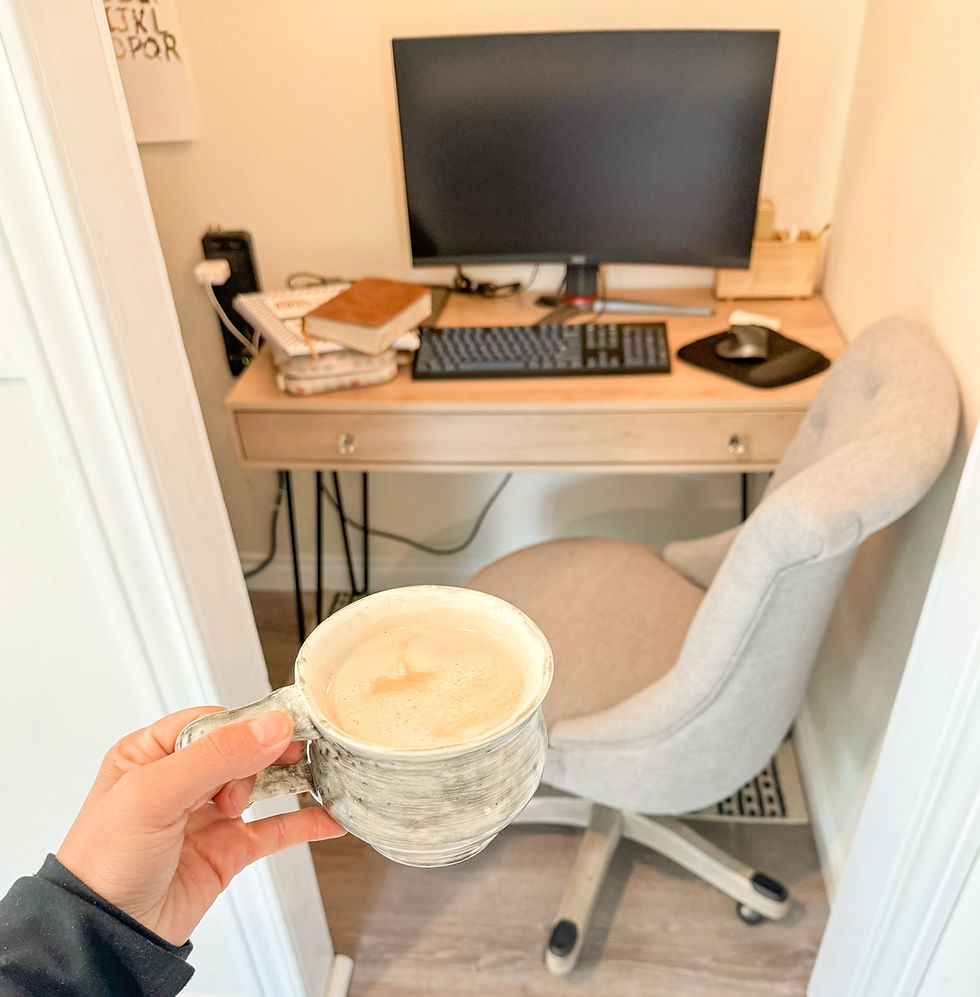
And speaking of our office nook, don't overlook spaces that might seem otherwise "wasted" in your home. We took an area under our stairs and created a mini homeschooling office nook. It's a great way to have an out of the way, but still public, use of the computer for our kids. It's super handy because its close to our table and allows us to easily store more supplies out of the way. I've seen adorable ideas for doing something similar by removing closet doors!
What Homeschool Supplies to Keep Within Reach
If you homeschool at the table like we do, it helps to keep your daily items nearby.
Things like:
• current curriculum
• notebooks
• pencils
• art supplies
Our curriculum books and notebooks are kept in wall mounted baskets near our table. This is super handy set up!
Simple Containers That Keep Supplies Organized
You really don’t need complicated systems or elaborate school rooms.
Over the years we’ve used:
• plastic bins
• rope baskets
• metal baskets
• cube organizers
• wood crates
• thrifted containers
Sometimes the best homeschool organization tools are the simple ones, perhaps not even geared toward schooling!

Homeschool Organization Ideas That Actually Work
Pinterest homeschool rooms are beautiful, but real homeschool organization often looks a little simpler.
Use Bins or Baskets for Each Child
Giving each child (especially older children) their own bin, basket, or space is one of the easiest ways to stay organized.
This is where they can keep:
• workbooks
• notebooks
• pencils
• personal supplies
It also encourages older kids to take responsibility for their materials and keep their space neat and functional.
Each of our older boys have one of these baskets for their personal supplies. They also each have a wall mounted basket for their workbooks and notebooks.


Create a Simple Curriculum Shelf
You basically need two things to homeschool:
A table and a place to store books.
We’ve used a lot of different furniture over the years:
• small bookcases
• cube organizers
• an armoire with the doors removed
• wall-mounted baskets
Any of these work great as a homeschool curriculum shelves!
Keep Your Main Learning Area Clutter-Free
Let me be real here for a moment—one of my daily goals is that breakfast doesn’t get mixed into our workbooks.
Homeschooling at the dining room or kitchen table means that food is a real part of homeschooling. And honestly, I’m okay with that.
A practical tip? If your space allows for it, have food (at least anything that doesn’t clean up easily!) at one end of the table and school at the other.
Or, if you have a kitchen bar, you could designate that for eating and school at the table.
How to Organize Homeschool Curriculum and Books
As you homeschool over the years, books and supplies can accumulate quickly. Having a place for everything helps keep things manageable.
Organizing Curriculum You Use Every Day
Daily books stay:
• in our kids' baskets
• on our main homeschool shelf
• or in a nearby bin
Keeping them within reach makes the homeschool day much smoother.
Storing Subjects You Rotate
Some subjects rotate instead of being used daily. These are things like unit studies you might use again, books about specific topics, learning manipulatives you use infrequently, and special art supplies.
Those can live in:
• more out of the way spaces
• folders
• cube shelves
This keeps these supplies and books accessible, but not cluttering your daily space.
Long Term Storage/Extra Homeschool Resources
As you homeschool over the years things accumulate.
One of the things we love about That It May Go Well Christian Homeschool Curriculum is that it truly doesn’t require a huge amount of extra supplies and shelves and shelves of books. However, inevitably, you do need more space over time.
We recently added an extra cupboard upstairs for more long-term storage. If you have good closet space or even a crawl space or basement these can be fantastic places for long term extras! I would consider out of the way spaces for things you'll rotate for another school year or age range.
How to Keep Your Homeschool Space Organized During the Year
We try to start the school year organized.
August is notoriously rainy here in Alaska (where we live), so I often use that rainy time to prep our homeschool supplies and learning space.
I love this because it creates excitement and anticipation for both me and the kids as we get ready to start homeschooling in September.
Many times we also do a mid-year re-organize.
By the end of the year… everything is a wreck.
The pencils have all seen better days — cue the bite marks, chomped-off erasers, and the favorite blue colored pencil you can no longer sharpen.
The glue is dried out and the workbooks are frayed.
It’s time to set things down and start fresh.
Our goal in the day-to-day?
Just keep the basics organized enough in our baskets and bins.
It doesn’t always look perfect, but functional is a worthy goal!
Homeschooling year-round has become increasingly popular. Honestly, if we lived almost anywhere other than Alaska, we would seriously consider year-round homeschooling. There are probably more reasons to do it than not, except when you live somewhere that is cold and dark for over half the year.
👉 If you homeschool year-round, drop a comment and let others know how you manage supply refreshes throughout the year!

A Simple Homeschool Setup That Works for Most Families
You really don’t need much to homeschool.
Most families can function well with:
• a table or desk
• a shelf or cube organizer
• a few baskets or bins
• a pencil or supply caddy
That’s really about it! 📚📒✏️
Here are ten simple tips to keep in mind as you organize your homeschool space, without overcomplicating things.
10 Simple Homeschool Organization Ideas
Don’t overcomplicate it.
Simple systems are usually the ones that actually stick.
Give older kids their own bin, basket, or space.
Encourage—and enforce—responsibility for keeping it neat, tidy, and functional.
Make it functional and cute.
You don’t have to let tacky kindergarten classroom décor overtake your home. Choose neutral, classy, and timeless color schemes for your bigger purchases!
Look for regular furniture for homeschool storage—and thrift it when you can.
You don’t need specialty homeschool furniture to make a space work well. Tucking school supplies into exsisting shelves and cupboards is the way to go.
Invest in a practical dining room table.
We made the mistake of buying a cool-looking table with slats…only to discover it was highly impractical for homeschooling. Our kids couldn’t write on it, and every little speck of Play-Doh got stuck in the cracks. No one wants to clean their table with a toothpick. Learn from my mistake. As cute as that table was, it wasn’t very practical—and it didn’t last long at our house!
Repurpose whenever you can.
If you find a utensil caddy for $1 at a garage sale, grab it! The caddy doesn’t care whether it’s holding forks or pencils. Ugly color? Grab a can of spray paint, head outside on a sunny day and fix that!
Keep daily items easily accessible.
Store things you use every day within easy reach. Items used monthly can go in more out-of-the-way spaces.
Use your walls.
We love using wire book bins on our walls. And we happen to think (possibly a slightly biased opinion) That It May Go Well is cute enough to display!
Plastic wins…sometimes.
I love the look of natural fiber baskets, but high-use bins can shed dust and fibers. Rope works well, but sometimes plastic or metal really is the better choice for items you use all the time.
Don’t cram too much into one space.
We've used the large cube organizers, and I still love them for some things—but not for daily supplies. It’s too easy for important items to get buried at the bottom. We use ours for 12x12 paper, sewing supplies, books that can stand upright in them, unit study folders, and other less-used supplies. Totally worth having—just not my favorite for everyday, high use items.
Frequently Asked Questions
Can I homeschool in a small house?
Yes!
We homeschooled in a house that was a little over 900 square feet. Everything we used fit on one bookshelf between the dining room, kitchen, and living room.
It absolutely can be done.
What supplies do I really need to homeschool?
• curriculum books
• necessary reading books
• a notebook for each child (2nd grade and up)
• pencils and a pencil sharpener
• basic art supplies like glue, scissors, and colored pencils
What about long-term storage?
Over time things accumulate.
A cupboard, closet shelf, or a few labeled bins works well for storing extra materials.
Other Helpful Homeschool Supplies:
Some optional items we’ve found helpful:
• a printer and paper *This really does belong at the top of the list in my mind!
• a globe
• a good pencil sharpener (thank you to my husband for finally getting us one!)
• a mini speaker for listening to Bible passages or worship songs
• a laminator
• a timer
• poster hangers
Real Life Homeschool Organization
We have lived in four different houses during our homeschool journey. *Pictures in this post come from a few of these spaces!
That means I’ve organized homeschool supplies in a small house, a medium house, and a house with a bit more space.
We’ve used:
• small bookcases
• an armoire with the doors removed
• cube organizers
• wood crates
• wall-mounted baskets
• an electric fireplace shleving unit
One of our the biggest challenges to homeschool organization for the last several years?
Toddlers. We love them dearly, but let’s be honest…There are just things you have to keep up with little ones are around. If you have a large family you're homeschooling this might be your reality too. Sometimes you aren’t able to give 100% attention while teaching older kids… no one wants cute little sister cutting her own bangs with the craft scissors or adorable little brother dumping glue all over the house!
Homeschool organization isn’t about perfection.
It’s about creating simple systems that work in real, family life.
Don’t let perfection rob your joy!
Most of us don’t have the absolutely perfect, modern spaces/homes we see online. Even when we have “photo op” moments at our house, our day to day looks far more real and messy. Create a space that lends itself well to your homeschool goals. Embrace what you have and make it work! Your space and your stuff should serve your family well, not become a stumbling block or a hassle!
Interested in more from our “How to Homeschool” Series? Check out these posts!
How to Start Homeschooling: 5 Simple Steps for New Homeschool Families
How to Choose a Christian Homeschool Curriculum (A Simple Guide for Families)
How to Homeschool Multiple Ages at the Same Time (A Simple Daily Rhythm for the Whole Family)
How to Homeschool on a Budget: Affordable & Attainable Ways to Homeschool


Comments