

Food Storage: A Simple Approach to Stocking During Seasons of Abundance
Updated: Sep 9
How much food does your family go through?
Taking time to consider just how much food your family goes through in a month, six months, or even a year can be a sobering exercise. It amazes me just how much food we really go through! Being aware is wise.

The Fragile Food Chain
Living in Alaska, we are very dependent on food coming into the state regularly by truck and by barge. Nearly all staples are imported. I've heard statistics that are rather alarming about just how long, like three days, the food supplies in our state would last without a steady influx.
We're very blessed to have natural resources. Hunting, fishing, and foraging are true ways that people around here fill their freezers. It's an amazing blessing and one we must steward well.
During COVID I think we visibly saw what a limited food supply looks like. It was the first time in my life I saw depleted shelves.

Is It Biblical to Store Food?
Since moving over two hours away from Costco, we've made efforts to store more food. While there are tremendous logistical benefits, it also feels right for us. Some topics in Scripture sit with tension. I think food storage is one. On one hand we pray for daily bread, Jesus promised those who follow Him enough for each day, and He promises to provide. We are called to not worry about tomorrow because each day has enough trouble of its own. We are not to depend on what we have, kick back, and forget about the Lord. The Parable of the Rich Fool in Luke 12:13-21 serves as a sober warning. Yet, there is also a strong Biblical case to be made that storing food is wise and righteous.
Proverbs 31 describes the virtuous woman rising while it is still night to provide food for her household. She brings her food from afar. She considers a field and buys it, and is not afraid of snow for her household because they are clothed and provided for in advance. That's a woman thinking ahead, not scrambling behind.
Proverbs 6:6-8 points us to the ant, gathering her food in the harvest, having no captain or ruler, yet preparing without being told to. Proverbs 21:20 says the wise store up choice food and oil in their dwelling, but a foolish man devours all he has. Genesis 41 shows us Joseph storing grain through the years of plenty so there would be enough through the years of famine. And in Leviticus 25, God tells His people that during the sabbath year of rest for the land, He will command a blessing so the harvest before it will be enough to store and eat until the new crop comes in. In Acts 11:27-30 the prophet Agabus, through the Holy Spirit, told of a famine to come. The Disciples took action to be able to provide for their brothers and sisters who needed help. Provision and preparedness aren't opposites in Scripture, they walk together. They aren’t always for us alone, they’re often stored for others too. Jospeh and the NT disciples both used the information they knew through through the Power of God to take decisive action for the benefit of others.

Much About Our Food System Has Changed
Just a few generations before us, many more people stored food out of survival and necessity. In an era of "run down to the grocery store" every other day, I wonder if many homes lack a basic and wise level of preparedness in the pantry. I don’t know about you, but prior to just a few years ago I had limited knowledge of how to feed myself and my family in the event of the food supply chain breaking down. These are skills and knowledge worth cultivating.
Is Storing Food Possible? Is It Worth It?
As a family that cooks most meals at home and from scratch, having a stock of basic ingredients is very helpful. It has saved me hours of time spent shopping and a colossal amount of brain power. It takes a bit of effort to get set up for food storage, but even with limited space it is possible. When we were in a house under 1,000 square feet with three kids, we still managed to keep a safety net of food stored. With a bit more space, it is possible to have a food system that functions well and actually makes your life easier.

What to Store
Let me start with what NOT to store. Do not store things you don't eat. Do not store things you're just trying out or things for a fad diet. Do not store highly processed food, devoid of nutrition, that you have no intention of actually consuming.
Store the Basics You Regularly Eat
Flour
Oatmeal
Dried shredded hashbrowns
Rice, beans, and pasta
Oils
Butter and cheese *Both last for a long time reridgeratered and can be frozen, although it will change the texture of the cheese slightly and we mostly use cheese melted once it’s been frozen.
Dried fruit (raisins are a go-to for us)
Canned goods – fruits and veggies + some beans and a couple easy options
Powdered milk, for baking and in a pinch (Not a cheaper option these days! We use it in our pancake mix so it’s able to be rotated at our house while still being available if we need it.)
Basic spices, seasonings, and flavoring including vanilla and salt
Frozen meat and fish
Don't Forget Water
Water is in a bit more of a short term prep category, but still worth storing.
It's easy to focus entirely on food and forget an essential thing your family needs: water. This is a different cattergory but worth a mention. We don’t store water for long term preparedness but more for a short term/situational times. For us, two of these situations are earthquakes and power outages. After one earthquake early on in our marriage our well was shaken up enough that our water was dirty and we could not drink it for a time. A general guideline is one gallon per person, per day, covering both drinking and basic sanitation, though more is better if you have the space. Commercially bottled water is how we do this. :)

Storage Systems
Five gallon buckets with gamma seal lids, glass jars, especially saved from things like pickles, free canisters. Rolling wheels for under buckets. A baking drawer. An extra space to keep, well, extras. We're blessed with enough room to easily keep a bit more on hand these days. We used to store extras in our crawl space in storage totes.
A few of the houses we've lived in have had deep, out of the way cupboards. These make a great place to stash extras. The top of the refrigerator in a cute basket is another great storage option.
I’ve tried several systems. A pet food roller worked well until we moved into a house with tile floors. Now we use heavy duty rollers with food safe buckets and I love this system. It feels like it will hold up!

A cheap cube organizer can be a great place to store extras in a "cuter" way. Tuck them along a wall or in a corner and fill them with basics.
Storing What You Grow, Forage, and Catch
Meat and Fish
When it comes to fish and meat, consider us nearly pro level, ha. We have a commercial vacuum sealer because of the amount of fish we process each summer, and we also use it to purchase chicken and beef on sale and package it for months at a time.
Vegetables
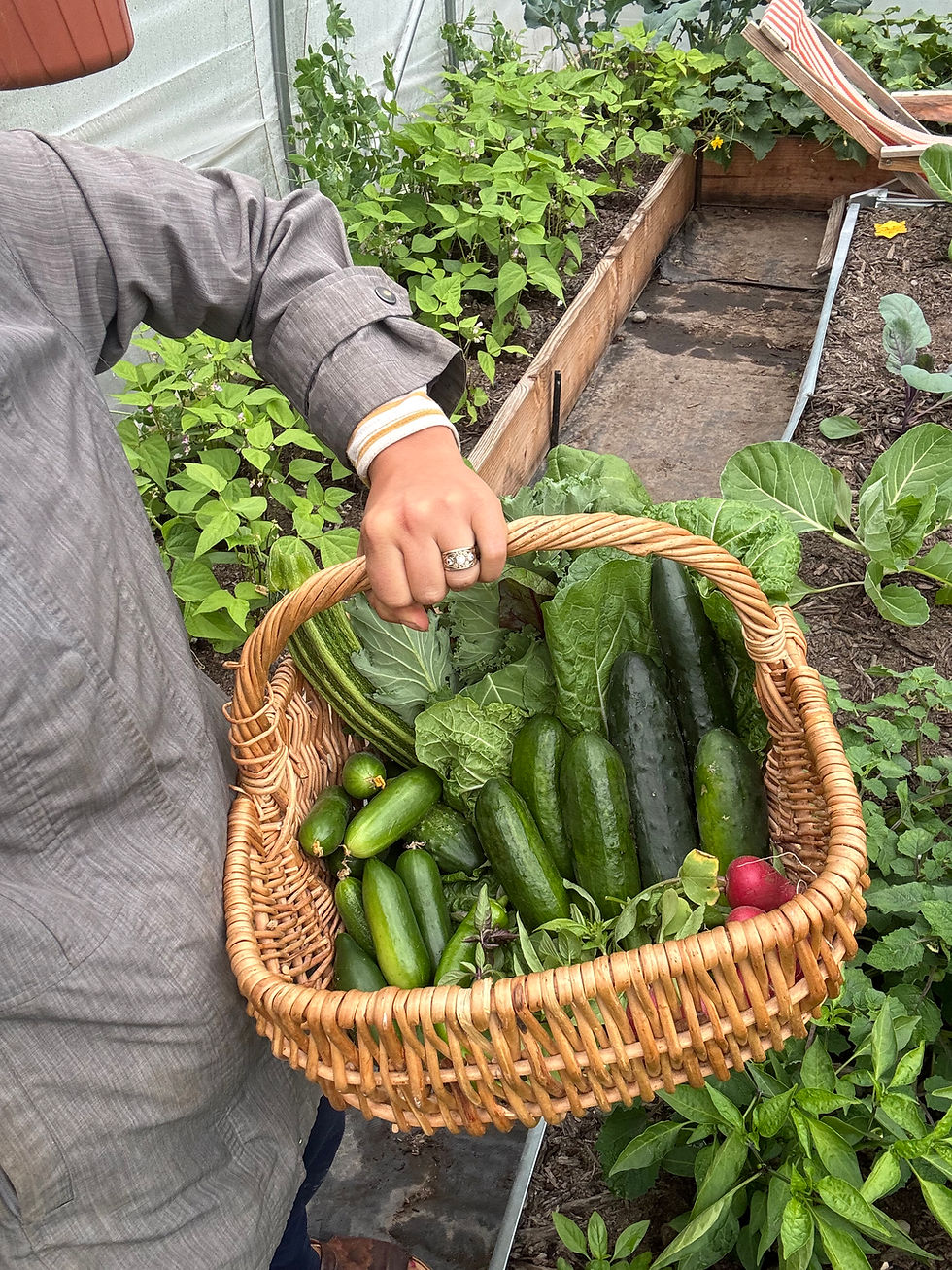
Admittedly I'm not a pro in this. We don't have a root cellar, but even without one we've stored potatoes we've grown ourselves into the winter. We have a spaghetti squash from last year's garden that I'm testing to see if it will make it until we harvest this year's winter squash. So far, so good.

We pressure can occasionally and use our pressure canner as a water bath canner too, so it's one less thing to store. I freeze veggies in a variety of ways, from fresh salsa and pesto to homemade gnocchi.
If you're newer to gardening for storage, our posts on how we grow our potatoes, our high tunnel beginnings, and a lesson we learned the hard way with fertilizer burn might encourage you.
Where to Shop When Stocking Up
My top two places are Azure Standard and Costco. Many of our staples come from Costco, and we now have a Costco Business Center in Anchorage, which has opened a whole new plethora of fantastic options.
If Azure Standard is competitive on price, by the time we pay the extra shipping to Alaska, I know their quality is better and will almost always pick them. I've been making a recent push to try to move more things we buy at box stores in town to Azure. If you have the family size to buy in larger quantities, Azure gives you greater discounts the more you buy. This allows me to buy things like cream cheese in bulk, purchase organic, and not break the bank doing so. There is also the opportunity to accumulate reward dollars. Azure Cash, rewards you accumulate through purchase to apply toward future orders, are a nice way to take some money off your order when you check out. There are many things we buy only through Azure such as cereal, certain snacks, many spices, and several other regulars in our family food rotation!
I also shop sales at our box stores like Fred Meyer and Walmart. When something I know we regularly use goes on sale, I stock up. Most of the time these are not the best option, but in all honesty we do still regularly shop them.
Buying Local
Depending on where you live and what's available, you may be able to get fantastic extras such as tomatoes and apples locally for very reasonable prices. Local anything in Alaska is a hot commodity and we pay dearly for it. Other than our own garden, I mostly treat buying local as a treat and not a feasible storage option, just being honest. There are a couple exceptions. The last few years we have picked onions and garlic locally and keep them frozen. Note, make sure you don't vacuum seal onions and garlic. We store them in regular freezer bags without issues for up to a year. I wish it weren't so, but it's the reality of where we live. For nearly anyone outside of Alaska, be resourceful and check around. I love reading about the amazing local finds people in the Lower 48 are able to process and store for a very reasonable price.

Where to Start
If you're new to the idea of storing food, and perhaps feel led to start doing so, it isn't scary. Pick your top five things to start with. Budget slowly to build a base. Once you have a base of your core products, it's really just about first in, first out.
What About Amazon?
Amazon has its place in our food storage rotation, just not a starring role. We save it for a few specific items, things like pretzels and couscous. It's not our main supplier and I don't lean on it for bulk staples, but for the odds and ends that round out the pantry, it's a handy option to have.

What food should I store?
Here are 5 foods to start with!
Flour. For us this is a mix of unbleached organic from Costco and whole wheat, either Prairie Gold from Montana Wheat or red whole wheat from Costco Business. I nearly always cut it with white flour these days, so while I prefer white whole wheat, I'm fine with red these days too.
Salt
Oil
Sweetener of choice, honey or sugar are quality choices. Honey lasts forever, and sugar lasts a long time. We just recently got in on the Waves of Abundance sales through Azure for honey which was so exciting!
Whichever your family uses and likes the most, beans, rice, or oats
It isn't a huge cost to store flour, other grains, and salt. When you get to oils and sweeteners, it's okay to disperse your stocking over a few months to spread the financial burden out. We store olive oil in a dark cabinet and haven't had it go rancid over a year plus.

Start Small
Aim to increase your food storage by one month if that's all you can do right now. Aim to have a six month stockpile over the next year, with a goal of a year long supply of your core basics.
As always in any area of life:
“Trust in the Lord with all your heart and lean not on your own understanding; in all your ways submit to him, and he will make your paths straight. Do not be wise in your own eyes; fear the Lord and shun evil. This will bring health to your body and nourishment to your bones. Honor the Lord with your wealth, with the firstfruits of all your crops; then your barns will be filled to overflowing, and your vats will brim over with new wine.”
Proverbs 3:5-10 NIV


Comments